
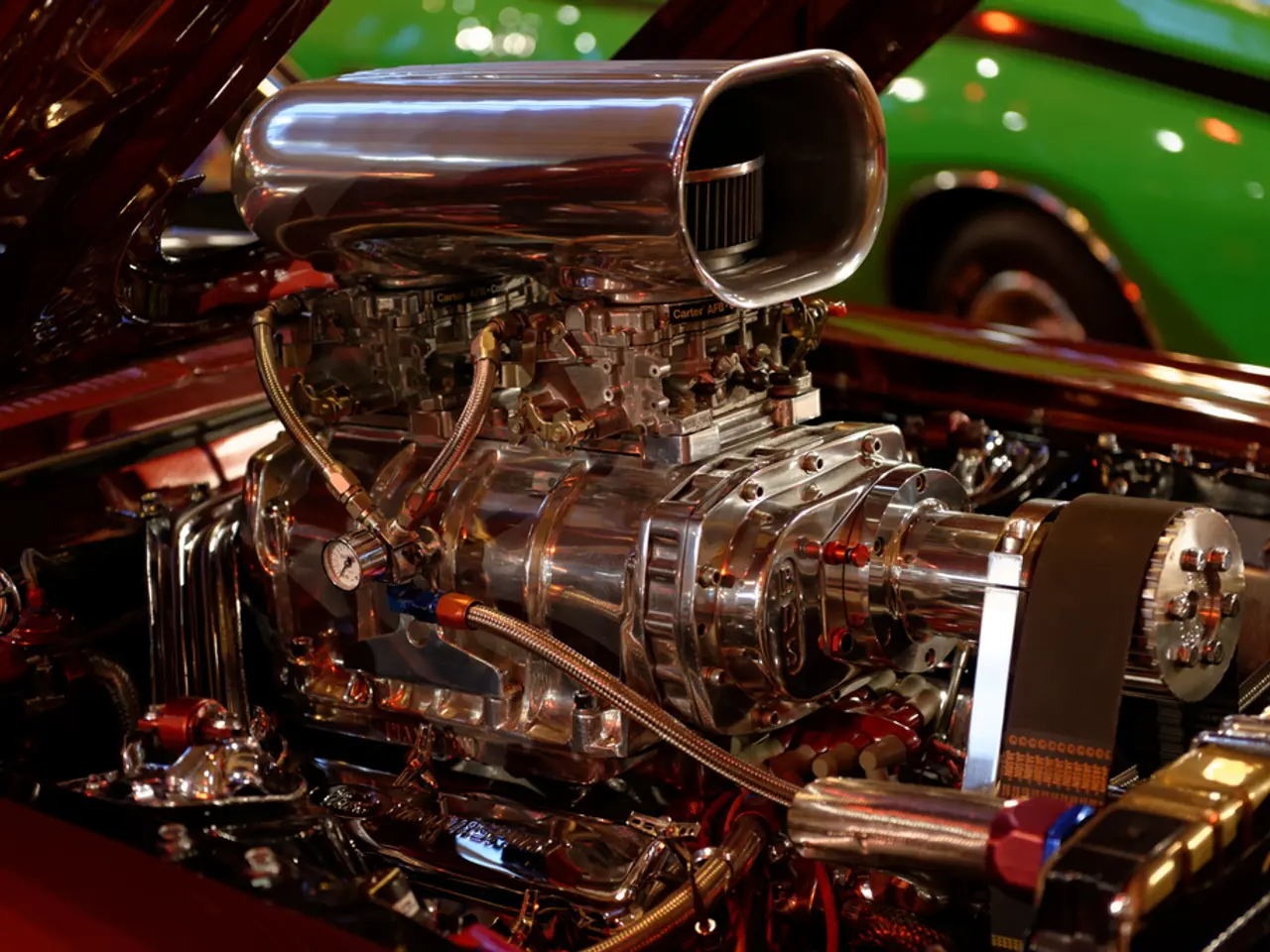
Discussion underway in the EU regarding proposals to render repairable vehicles less efficient
The European Union (EU) is tightening its emission regulations as part of the Euro 7 standards, introducing stricter exhaust and evaporative emission controls, anti-tampering measures, and durability requirements. These regulations aim to reduce harmful pollutants like NOx and particulate matter, contribute to public health benefits, and promote cleaner vehicle technologies.
Under Euro 7, vehicles will face new limits on tailpipe emissions, real-world on-road testing, and requirements on evaporative emissions, brake dust, and tire wear. To ensure emission controls remain effective throughout a vehicle's life, manufacturers will need to comply with detailed type-approval procedures that restrict modifications such as replacing exhaust systems with non-approved parts.
For vehicle owners, these restrictions may mean limited options or higher costs for replacing or modifying exhaust systems, as only EU type-approved systems complying with stringent emissions standards can be used. Increased compliance and inspection regimes will also be implemented to confirm that emission control systems are intact and functioning, making unauthorized tampering or replacement more difficult and potentially illegal.
Older vehicles not meeting Euro 7 standards could face restrictions or penalties in low emission zones or when registering under newer EU mobility rules. The shift towards cleaner or electrified vehicles may be accelerated as Euro 7 also includes durability requirements for batteries and addresses emissions from electric vehicles’ brake systems.
The EU is also planning to impose an annual TÜV obligation for older vehicles and has rejected individual approval for exhaust components under § 19(2) or § 21 StVZO. The EU no longer provides individual expert opinions for exhaust system components in vehicles with EU type approval.
Vehicles without a valid MOT (TÜV) may no longer be sold, either privately or commercially. The bureaucratic measures of the EU make it increasingly difficult to export vehicles. The state subsidy for electric vehicles, known as the environmental bonus or purchase premium, ended in late 2023 without a transition period, leading to criticism and confusion.
However, the forced scrapping of vehicles due to bureaucratic measures raises questions about its relationship to climate protection. It remains unclear how this fits into the rhetoric of bureaucratic reduction. The European Union in Brussels is pursuing a potential policy that could render vehicles unusable due to the discontinuation of E-tested replacement parts by manufacturers.
[1] European Commission. (2021). Proposal for a regulation of the European Parliament and of the Council on the type-approval of motor vehicles and their trailers, and of systems, components and separate technical units intended for such vehicles.
[2] European Parliament. (2021). Regulation (EU) 2021/830 of the European Parliament and of the Council of 16 June 2021 on the type-approval of motor vehicles and their trailers, and of systems, components and separate technical units intended for such vehicles, amending Regulations (EC) No 715/2007 and (EU) 2018/858 and repealing Directives 2007/46/EC and 2007/116/EC.
[5] European Commission. (2021). Factsheet: Euro 7 and Euro 7a emission standards for motor vehicles.
- The Euro 7 regulations, which include stricter technology standards, will necessitate vehicles' exhaust systems to comply with detailed type-approval procedures, making it challenging for owners to replace or modify their exhaust systems without using EU type-approved parts.
- With the implementation of Euro 7 standards, vehicle manufacturers will need to adapt their technology to meet the new requirements, aiming to ensure efficient emission controls and promote cleaner vehicle technologies throughout the vehicle's life.